Qualify second sources faster, run complex contract manufacturing and logistics tenders, and bring lab supplies under management. While others compare unit prices, you optimize total cost.
In Chemicals and Pharma, the supplier becomes part of the product. A new API source, a different excipient grade or a new contract manufacturer means qualification, a quality agreement, audits, and a change-control record before the first purchase order goes out. Production runs through own plants, contract and toll manufacturers, and products move through complex networks of warehouses, distributors, and dangerous-goods carriers. On top, scientists across sites order lab supplies and research services from their individual preferred supplier, not the company’s. That is why isolated AI use cases don’t work here.
Two-thirds of APIs come from Asia.
APIs, intermediates, basic chemicals. Two-thirds of the Active Ingredients for the European market come from Asia, and European chemical capacity closures have risen sixfold since 2022. Buyers requalify sources they never chose to change, and every second source runs through QA.
Outsourced production, insourced risk.
Contract manufacturers, CDMOs, toll manufacturers. Biopharma expects to outsource more than half of key manufacturing capacity, batch prices are up 7% since 2020, and deviations, failed batches, and rework can account for up to 20% of cost of goods sold. Choosing a partner means weighing capacity, quality, and price per batch at once. The quality risk stays with you.
Distribution networks, regulated on every lane.
Warehouses, distributors, road, rail, sea. Every lane carries dangerous-goods or temperature requirements, the logistics market has turned supplier-driven, and price per shipment says little about total cost. One error in the chain can cost more than the last rate negotiation saved.
Hundreds of lab suppliers. Dozens of glove variants.
Reagents, consumables, equipment, research services. Hundreds of lab suppliers, thousands of SKUs, and scientists who order outside preferred channels and contracts because speed and brand preference matter more than price. Structured sourcing can easily save 10 to 15%, but the value leaks where operational execution is disconnected.
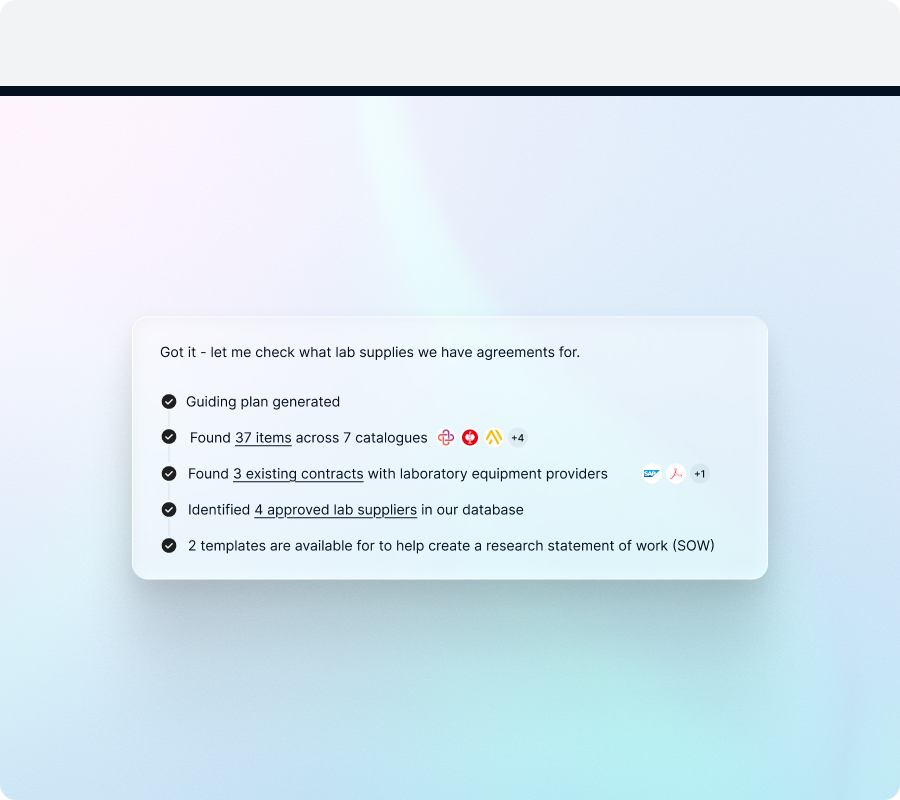
Stop chasing scientists and plant teams for the material number, grade and required certificates. Guided buying and our conversational intake capture every request, check catalogs, B2B marketplaces, approved suppliers, and frame contracts, and route it by category, site, and approval threshold. Scientists get what they need fast, and a new sourcing or qualification process starts only where one is needed.

Stop letting thousands of lab suppliers and dozens of variants of the same glove run your lab spend. AI guides towards available catalogs and marketplaces that cover the standard range, while autonomous agents source and negotiate non-catalog lab items and PPE within your guardrails, and spend analytics agents identify consolidation opportunities. Your buyer reviews the results, acts on the opportunities, and banks the savings from tactical and tail spend negotiations.

Stop accepting price increases on solvents, intermediates, and feedstocks at face value. AI agents combine your price history across sites and ERPs with commodity and raw-material indices, check every increase against index development and the supplier's cost structure, and draft a fact-based counter-offer. Your buyer negotiates with confidence, and price increases get mitigated.

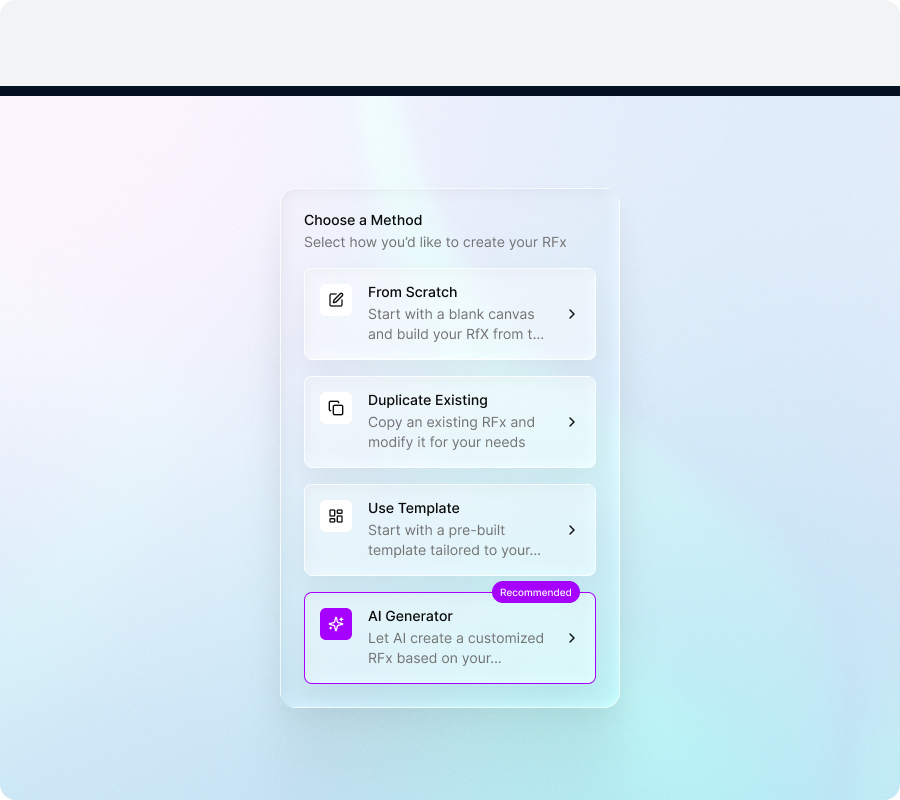
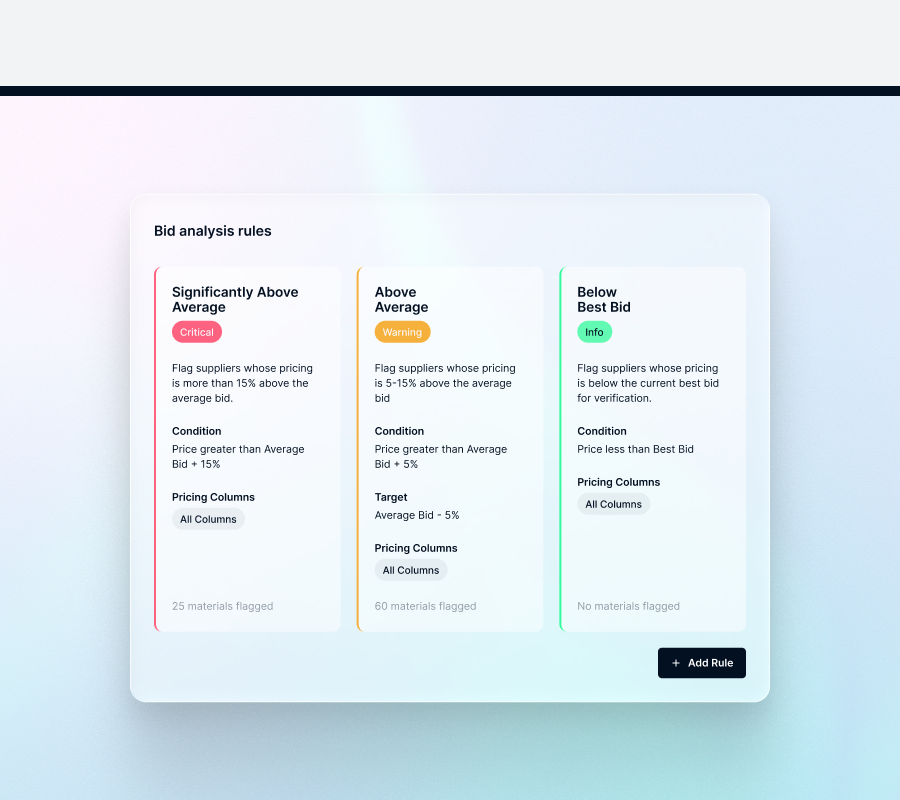
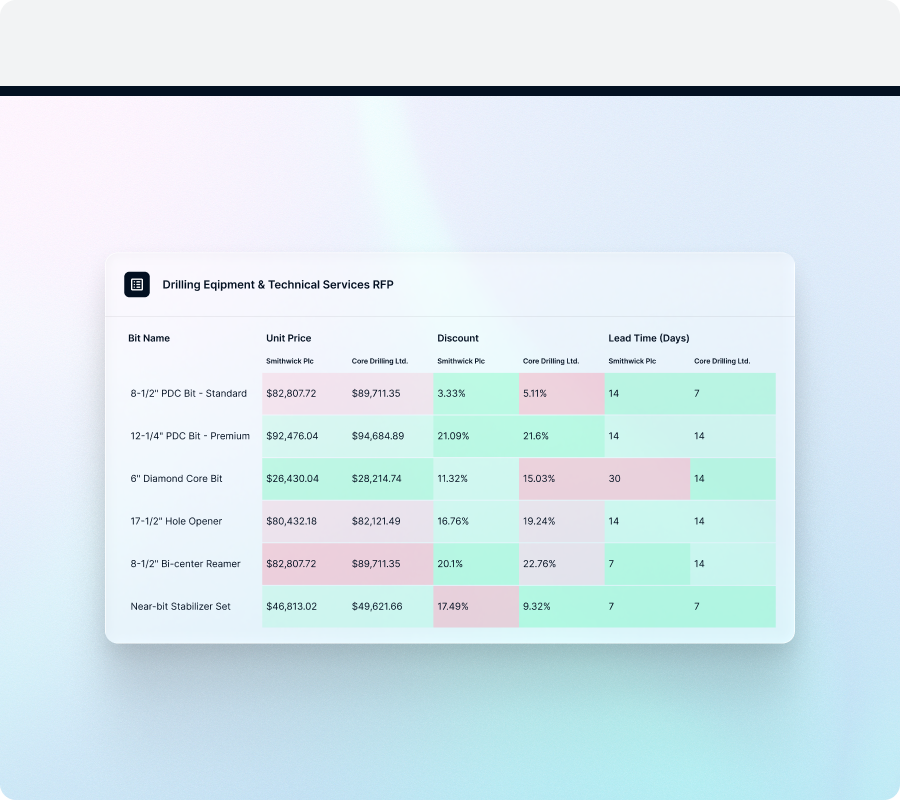
Stop copying specifications and supplier questionnaires from the last project. Our RFP Document Generator drafts the RFQ, technical specification, and qualification questionnaire from the captured request and your templates, and our AI bid analysis compares quotes across grade, certificate, origin, lead time, and total cost. Your buyer and QA see every deviation before the award, and the qualification process starts with the RFQ.

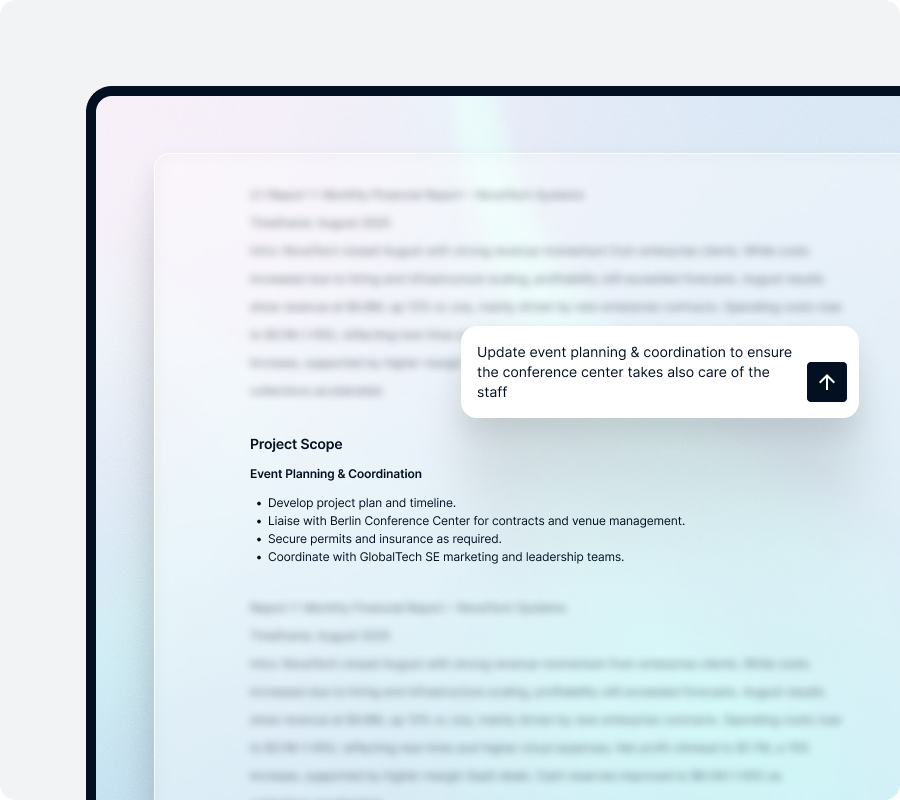
Stop awarding analytical testing, synthesis, and lab services on a single quote. Our GenAI Scope Generator turns scientists’ briefings, previous projects, and internal standards into a clear Statement of Work (SOW) with a cost template for rates, roles, and deliverables, and AI bid analysis compares proposals on the same basis. Research gets the right partner, and Procurement gets competition back.

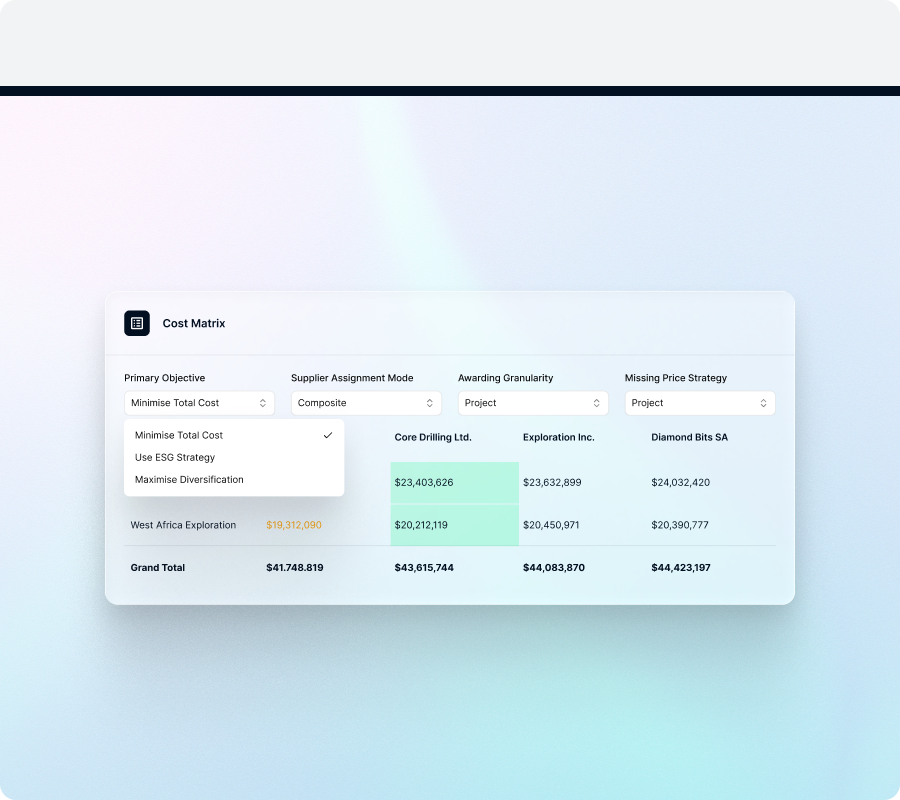
Stop comparing CDMO and toll-manufacturing offers in spreadsheets that miss batch sizes, tech-transfer cost, and capacity. Run sourcing events with expressive bidding, bring in quality and delivery performance from your QMS or ERP, and model award scenarios against capacity, risk-mitigation rules, and allocation splits. Agents prepare the scenarios, your buyer and QA award.

Stop tendering warehouses, distribution centers, and carriers on freight rates alone. Run logistics tenders across hundreds of lanes, with dangerous-goods and temperature requirements in every lane, bundle bids by region and mode, and model award scenarios on total landed cost and capacity. The network that wins is the one that delivers, not the one with the lowest rate.

37%
reduced order processing time
47%
faster award decisions
4.9%
average savings in tactical & tail spend negotiations
Qualification questionnaires get tailored by category, ensuring supplier evidence stays current with automated expiration checks, while onboarding runs 50% faster, so a second source is ready before the first one fails.
CDMO and toll-manufacturing offers are compared on Total Cost of Ownership, with capacity, tech-transfer cost, and quality and delivery performance from your QMS or ERP in every award scenario. Deviations and failed batches weigh in before the contract is signed, not after.
Logistics tenders weigh dangerous-goods and temperature requirements, capacity, and total landed cost lane by lane, so the network you award protects supply, not just the freight rate.
Scientists order in plain language and are guided to contracts, catalogs, and approved suppliers at the point of need, while agents source and negotiate the rest, with an average 4.9% savings in tactical & tail spend negotiations.

AI in Strategic SourcingThe inability to manage, analyze, and optimize complex tenders in standard sourcing tools keeps Procurement stuck in Outlook and Excel. AI enables sourcing managers to break that pattern.
Blog
Webinar
039
Seamless buying experiences: Unite’s leading B2B marketplace now available through ProcureAi’s Generative Intake ManagementProcure Ai and Unite partner to simplify B2B buying. Access Unite’s marketplace directly in Procure Ai for faster, compliant, connected purchasing.
News
022
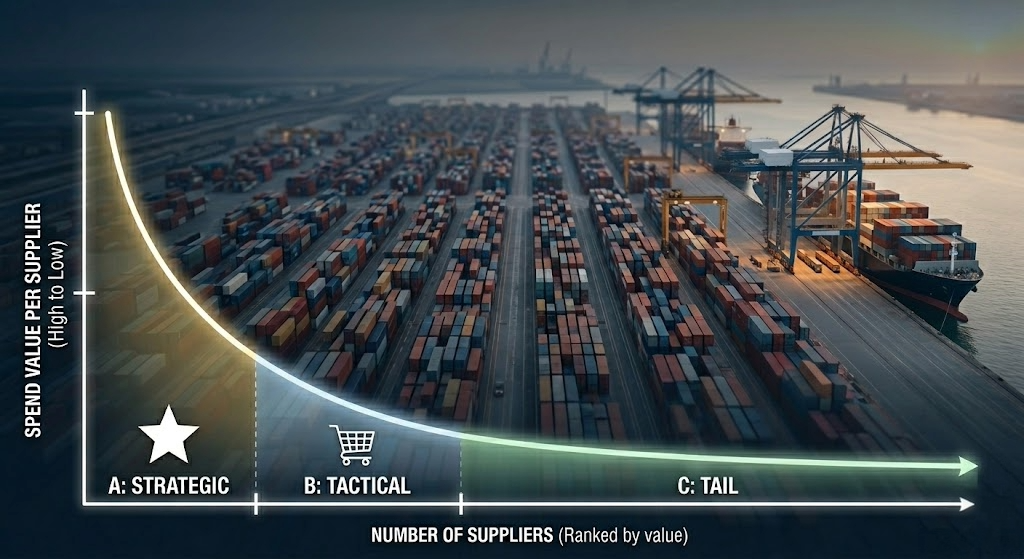
Tail spend optimization: From liability to valueUnderstand the components of tail spend management and the different ingredients that need to come together to optimize it.
Blog
028
Gain spend visibility across departments, frameworks, and ERPs in one place, including the below-threshold nvolume nobody reports on today.
Let requesters describe needs in plain language and route every request by threshold, category, and existing framework.
Run below-threshold and repeat purchases autonomously, from supplier search to negotiation, within guardrails your procurement office sets and can change.
Prepare specifications and evaluate bids against your published criteria. Agents prepare, your team decides.