Negotiate Raw Materials and Packaging with the full market picture, bring indirect spend from Marketing to IT under active management, and optimize complex Logistics networks. While others fight operational fires, you protect margins and enable growth.
An FMCG manufacturer buys for a recipe or formulation, a pack, or a shelf price controlled by retailers. Direct spend for Raw materials, Chemicals, Components, and Packaging brings the complexity of manufacturing: specifications, approved suppliers, certificates, and prices that move with indices, harvests, oil and exchange rates. Indirect spend brings the scale: almost half of all spend, across Marketing, Consulting, IT, Facility Management, Logistics, and MRO, bought by plants, brands, and functions at many sites. Every reformulation, pack change and launch needs suppliers fast, and retail rarely accepts a cost increase without proof. That is why AI solutions built for one kind of spend don’t work here.
Inputs move every month. Shelf prices move once a year.
Cereals, oils, sugar, cocoa, surfactants, resin, pulp. Within a single year, world market prices for cereals, vegetable oils and sugar rose by double digits while dairy fell by almost a fifth, and over 70% of European brand owners expect packaging costs to rise. Retail sets the price once a year, private label takes almost four in ten euros of European grocery sales, and every cost increase has to be substantiated line by line. This makes forecast accuracy, risk hedging, and flexible contract terms primary objectives for Procurement.
Services bought on trust, not on scope.
Consulting, IT services, marketing agencies, Media. Services projects start with a rough brief from the business, and Procurement is often brought in only for the final negotiation. Scope, rates, and deliverables are hard to compare, so the incumbent or preferred partner wins by default.
Every lot traceable. Every claim provable.
Pathogens in food, banned substances in cosmetics. Recalls happen every week across Europe and the US, and many start with a raw material. From food safety audits and FDA supplier verification to deforestation due diligence and packaging fees in Europe, the UK and US states, every market adds its own proof. The evidence sits with suppliers. The liability sits with you.
Almost half the spend is Indirect. With thousands of suppliers.
Marketing, Beratung, IT, Facility Management, Logistik, MRO. Indirekte Ausgaben machen 30 bis 45 % der Ausgaben eines typischen FMCG-Unternehmens aus, verteilt auf bis zu 13.000 Lieferanten je 1 Mrd. US-Dollar externer Ausgaben. Vieles davon kaufen Werke, Markenteams und Fachbereiche ohne Bestellung oder ohne Positionsdetails. Preis- und Vertragstreue lassen sich so kaum durchsetzen, und Maverick Buying nimmt zu.
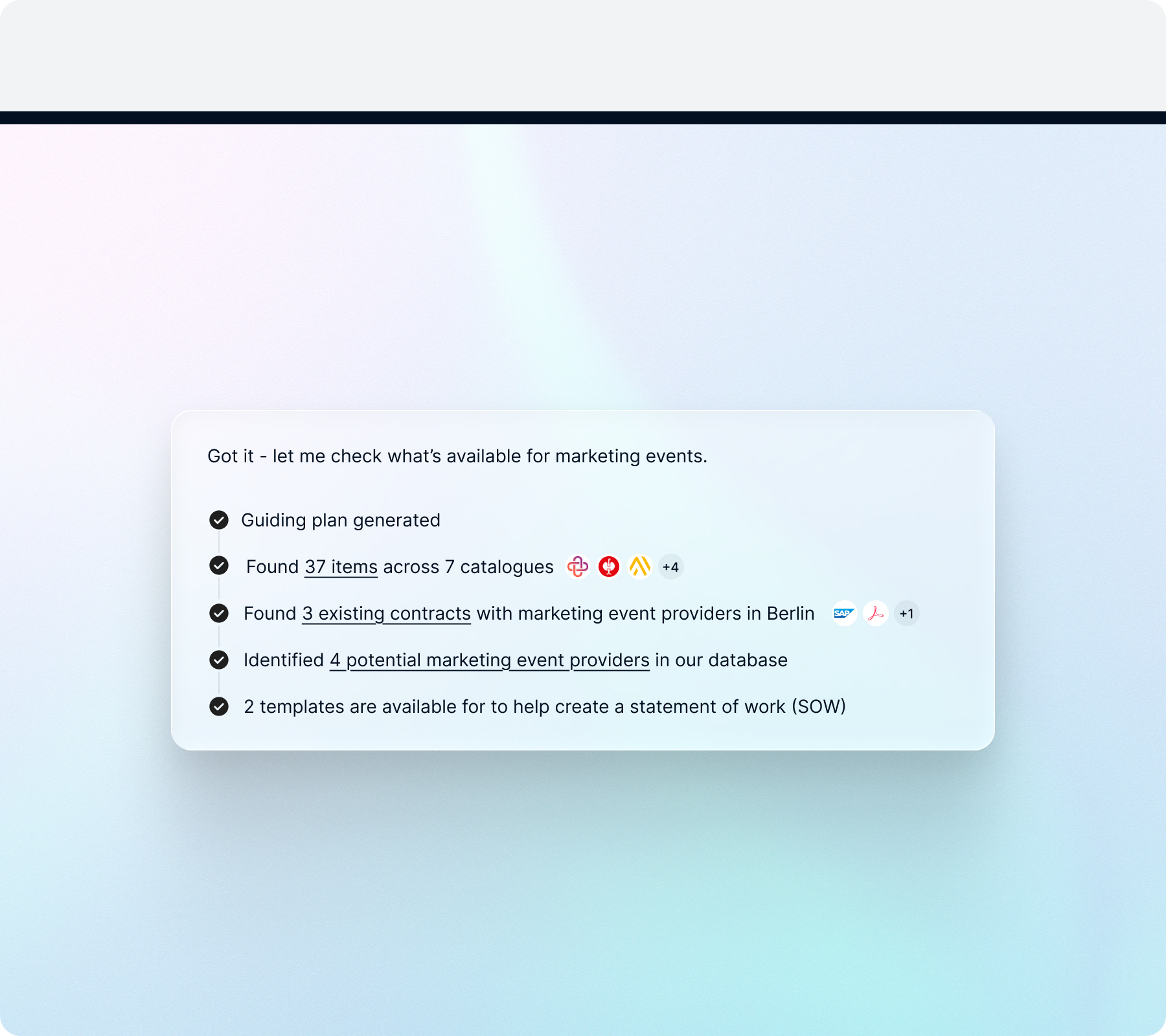
Stop sourcing what a frame contract already covers. Guided buying and our conversational Intake capture every request, from a new pallet wrap to a marketing agency or an IT license, check contracts and catalogs first and route it by category, country, and site. Call-offs become the default, maverick spend drops, and a new sourcing event starts only where one is needed.

Stop building commodity briefings from index subscriptions, old quotes, and spreadsheets the night before the supplier meeting. AI agents combine your price history, contract terms, commodity and raw-material indices, current price benchmarks, and the latest news into one briefing per category. Every supplier negotiation and every cost discussion with retailers starts from the same facts.

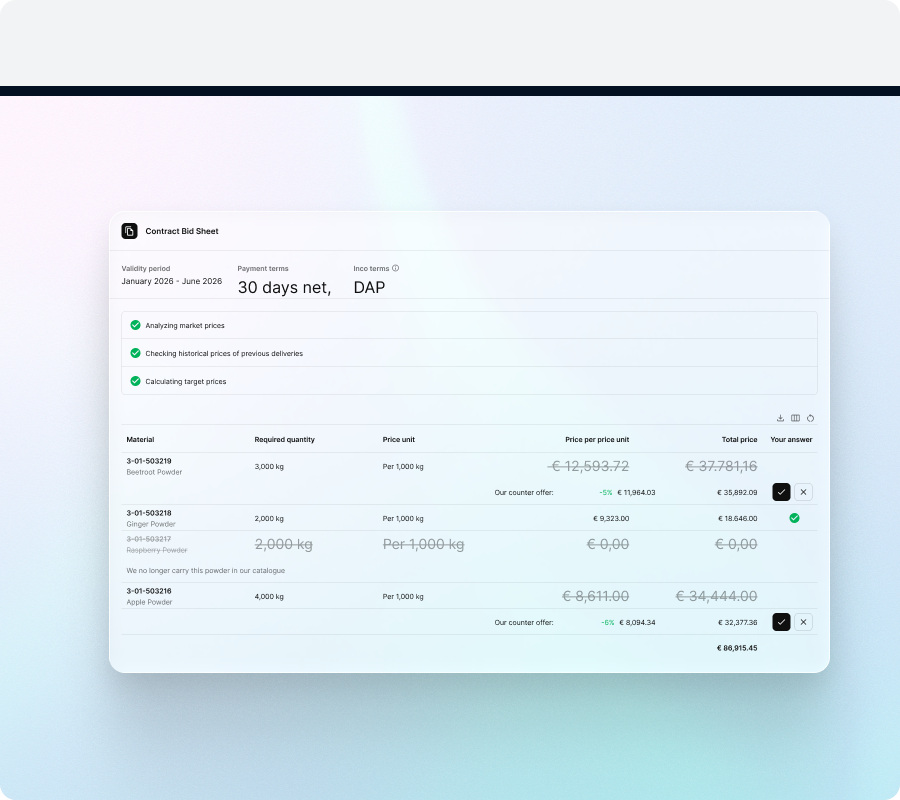
Stop accepting supplier price-increase letters at face value. AI agents check every request against index development, benchmarks, and the supplier's cost structure to draft a fact-based counter-argument or counter-offer. Your buyer decides, and every cocoa, dairy, surfactant, or packaging increase becomes a negotiation you are prepared for.

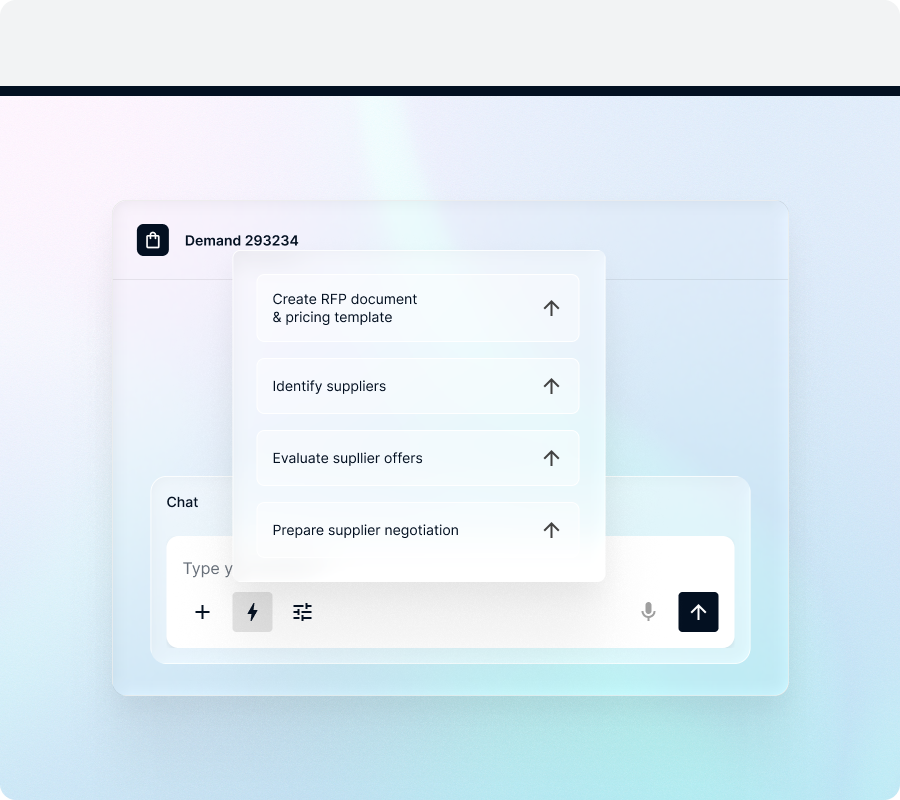
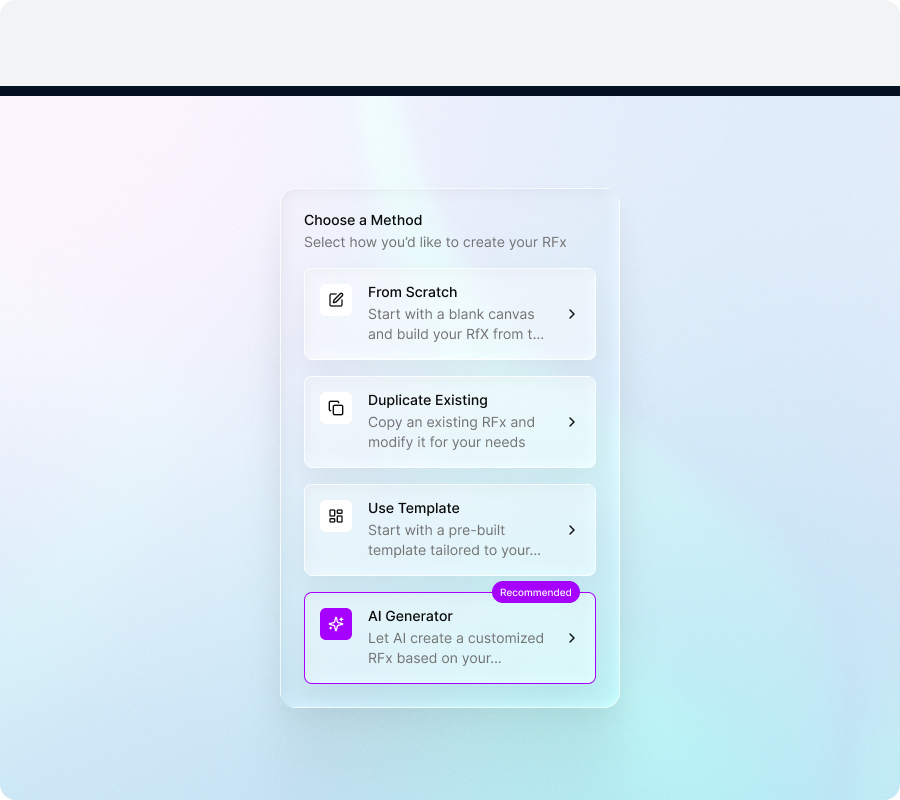
Stop copying specifications from the last project and requesting the same certificates for every tender. Our RFP Document Generator drafts the RFQ from your raw-material or packaging specification and your existing templates, and the supplier record shows approval status and flags expired certificates before the request goes out. Your category manager and quality team review and release.

Stop splitting Packaging, Logistics, and MRO tenders into dozens of spreadsheets by plant, format, or lane. Run sourcing events across thousands of packaging SKUs, freight lanes, or MRO positions with expressive bidding for bundles, volume tiers, and alternatives, and model award scenarios against capacity, dual-sourcing rules, and total cost. Agents prepare the scenarios, your category manager decides.

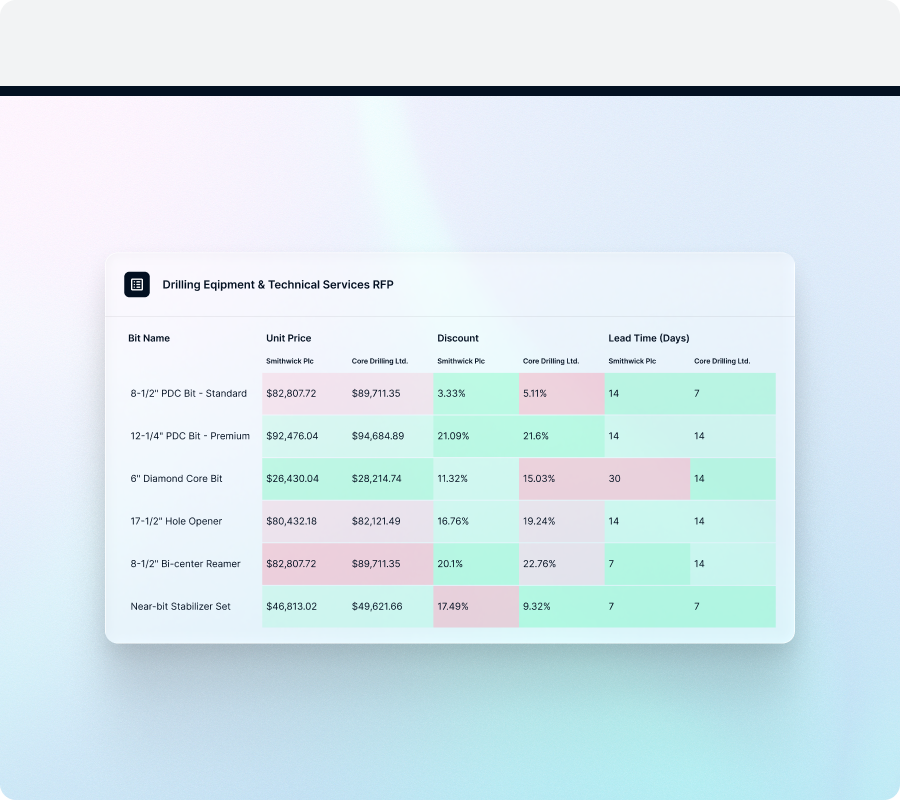
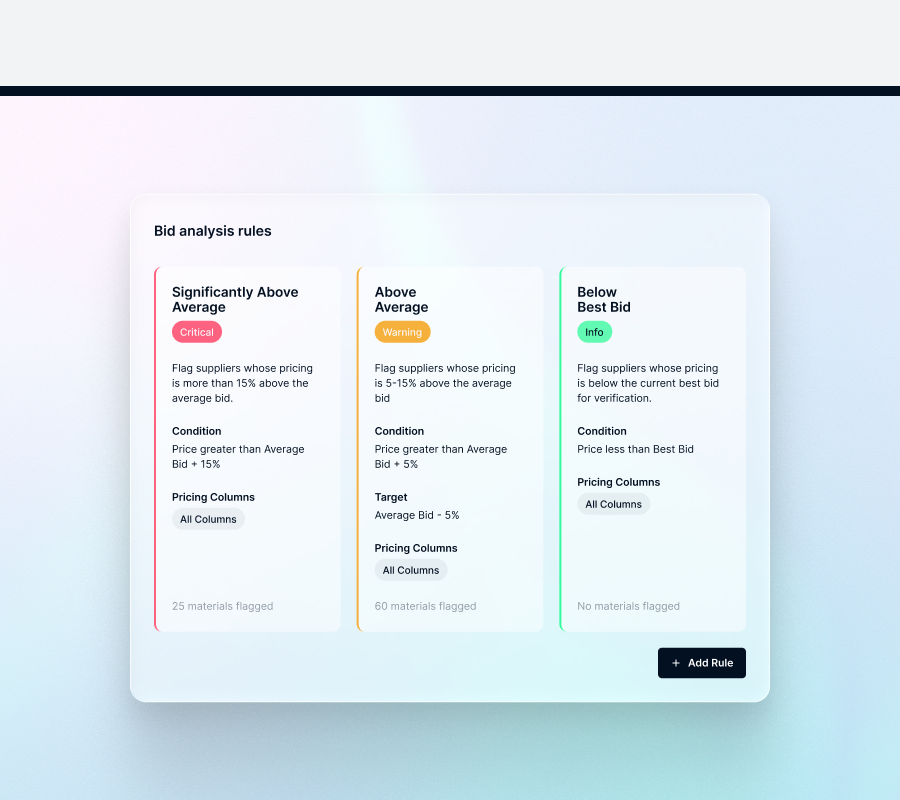
Stop normalizing offers in Excel and finding the deviation in the specification after the award. Our AI bid analysis validates every offer against your specification, Incoterms, lot sizes, lead times and duties, and flags deviations and gaps for your team. The comparison stays consistent across suppliers and sites, and the award stays with your buyer and quality team.

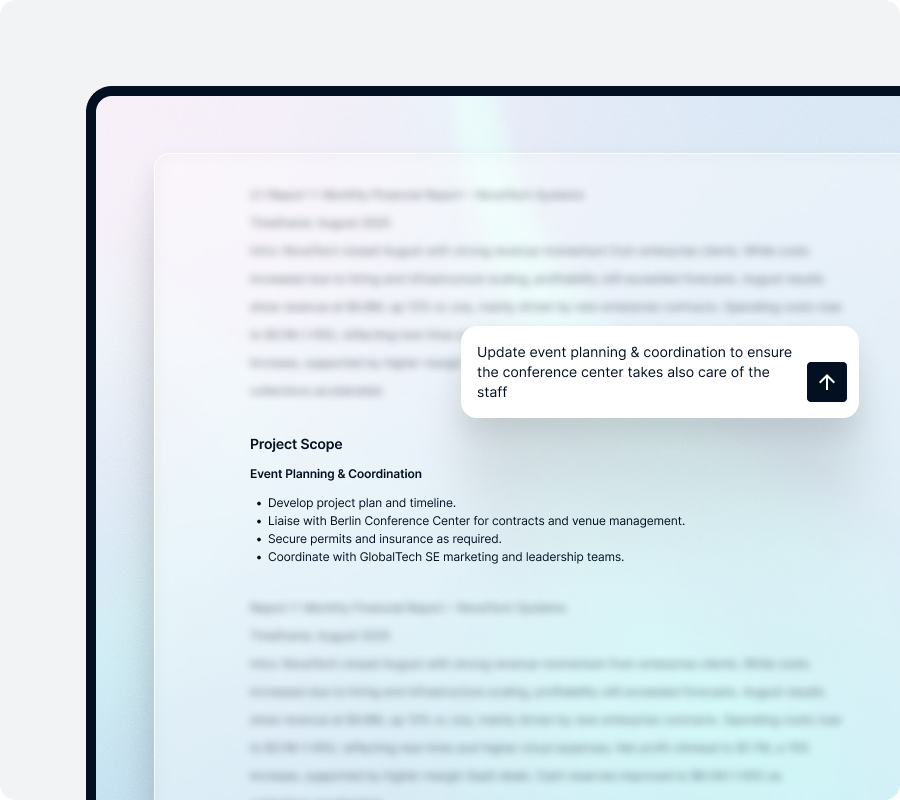
Stop letting consulting, IT and agency projects start on a rough brief and a single quote. Our GenAI Scope Generator turns stakeholder briefs, previous projects, and internal standards into clear Statements of Work (SOWs), questionnaires, and cost templates, while our AI bid analysis compares proposals on scope, rates, and deliverables. Competition returns to the services the business used to buy on trust.

37%
reduced order processing time
47%
faster award decisions
4.9%
average savings in tactical & tail spend negotiations
Index-based briefings, checked price increases and offers compared on landed cost give category managers the facts for every supplier negotiation and every cost discussion with retail.
Marketing, Consulting, IT, Facility Management, Logistics, and MRO are scoped, competed, and negotiated, with maverick spend visible across plants and brands.
Specifications drafted from your templates, supplier evidence kept current, and onboarding 90% faster put qualified suppliers in place before the recipe, the formulation, the pack, or the market changes.
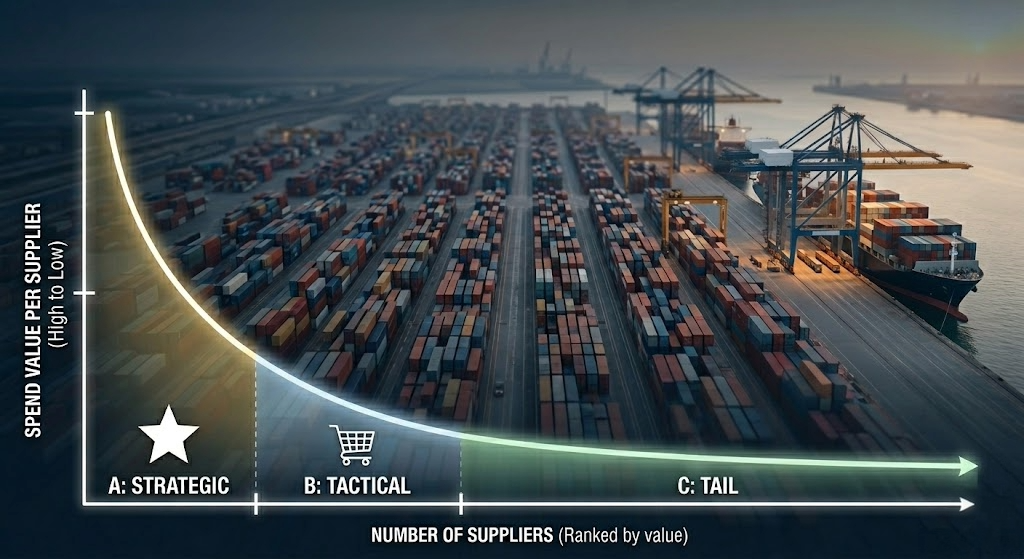
Autonomous agents renegotiate expiring frame agreements and tail materials and run sourcing events across MRO, Logistics, and Facility Management, with line-item targets per supplier. Achieve an average 4.9% savings in tactical & tail spend negotiations, without adding headcount.
Tail spend optimization: From liability to valueUnderstand the components of tail spend management and the different ingredients that need to come together to optimize it.
Blog
028
Building a procurement data strategyLearn how to build a procurement data strategy to improve data quality, spend analysis, drive smarter decisions, and maximize procurement impact.
Blog
017
Autonomous negotiations help Procurement deliver increased cost savings with AIAI-powered autonomous negotiations give procurement the tools to save more, scale faster, and increase efficiency. Explore how it works.
Blog
011
Gain spend visibility across departments, frameworks, and ERPs in one place, including the below-threshold nvolume nobody reports on today.
Let requesters describe needs in plain language and route every request by threshold, category, and existing framework.
Run below-threshold and repeat purchases autonomously, from supplier search to negotiation, within guardrails your procurement office sets and can change.
Prepare specifications and evaluate bids against your published criteria. Agents prepare, your team decides.