Procurement skills in the age of AI

Konstantin von Büren
Co-Founder Procure Ai
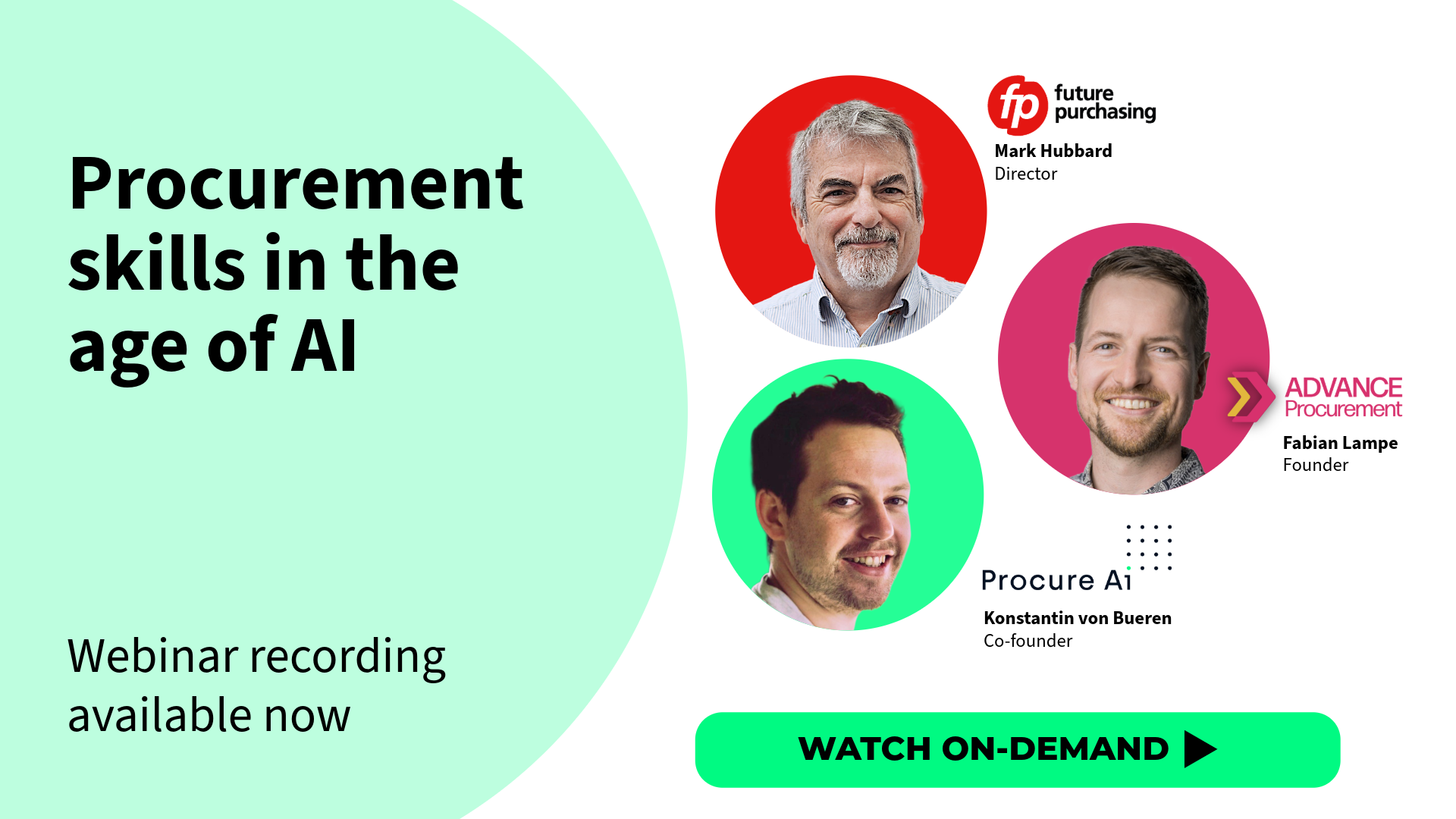
AI is fundamentally changing how procurement work gets done. As repetitive analysis, administration, and execution become increasingly automated, the skills that create value shift from process execution to judgment, collaboration, and strategic decision-making. Organizations that proactively develop these capabilities will be better positioned to scale AI successfully and maximize procurement’s business impact.
The AI-native Procurement Operating Model is not brought to life by technology. It is brought to life by people.That is not a comforting line but a pattern we see again and again: the tooling lands, and the results don't, because the skills and the mindset around it never caught up.
AI is redrawing procurement roles fast. Gartner reports that over two-thirds of teams are already exploring or using AI, and by 2028, 33% of enterprise software will include agentic AI. The tasks are shifting, and so are the skills.
Building on our recent webinar with experts in operating model design, training, and procurement transformation around the impact of AI on the Procurement Operating Model, we went deep on one question that decides whether any of this works: What skills do procurement teams need to thrive in the age of AI, and how do you build them? This is what we found.
Before talking about skills, we need to understand what agentic AI means. Ask a friend for a restaurant recommendation and you have a chatbot. Hand them your phone and say "book me a table for Friday", for which they will check options, make the reservation, and confirm it's done, and you have an agent.
Put simply, an AI agent has tools, the autonomy to choose which to use, and a goal it works toward over several steps. That difference matters for skills, because agents don't just answer questions but take on work procurement people used to do manually.
The impact is already measurable. Intake agents cut order processing time by 37%. Autonomous sourcing agents deliver 4.9% average savings on tactical and tail spend. And award decisions come 47% faster. This is not future talk, it's operating in procurement teams, more specifically in our customers, today. Which is exactly why the skills conversation can't wait.
For years, procurement skills frameworks have sorted capabilities into two buckets:foundational or technical skills on one side, and soft or business-partnering skills on the other. Most real work requires both. Here’s an overview of a Procurement skill framework from our partner Future Purchasing.
The evolution of AI doesn't flatten that map but expands and reprioritizes it. Some skills matter more, some fade, and new ones become non-negotiable. Here's how the picture shifts.
The candid part: productivity goes up, and that often means teams get smaller and roles change fast. It won't happen overnight, but the direction is clear. Procurement leaders deserve a straight answer rather than a comfortable one. - Konstantin von Büren, Co-Founder, Procure Ai
There's a real tension underneath this, and it's worth naming. Some expertise only comes from doing. If nobody runs a negotiation end-to-end, manages a contract, or works a sourcing process by hand, how do future practitioners build the instincts to oversee those processes at all?
As you automate more, you have to be deliberate about how foundational expertise is built and preserved. Otherwise, you risk a generation who can manage AI without truly understanding what it's doing on their behalf.
Procurement’s purpose doesn't change dramatically because of AI, but leaders now have to orchestrate systems of people, agents, and platforms. It takes genuine digital and AI fluency and a clear-eyed view of ethical oversight to navigate the new environment.
And while the procurement skill matrix evolves, new roles surface alongside it: AI trainers, knowledge managers, AI system supervisors, and the procurement automation platform owner, sometimes called ProcureOps. That's the role that grows in importance as AI scales, not shrinks.
This makes the right mindset a hard requirement. The environment rewards openness to AI, a willingness to experiment, and a commitment to continuous learning. People with that growth mindset thrive in a high-trust, high-impact function built on connected systems and leaner teams. Increasingly, it's less about what you know on day one and more about your appetite to keep learning.
There's a thread that runs through everything above. You can't sharpen digital skills, challenge an agent's output, or evaluate where AI actually fits without AI literacy. And there's a trap worth calling out: awareness is not literacy.
Many procurement professionals are aware of AI: they've seen demos, read the blogs, clicked the embedded features. But being AI-literate is different. It means understanding how the models work, what data they need, and where the risks sit.Only then can you challenge outputs, spot data issues, and use AI responsibly and with confidence.
Awareness is passive. Literacy is proactive. It's what turns procurement from a passive consumer of technology into an active, strategic user of it.
This is where adoption is won or lost. For years, training and enablement focused on teaching people how to navigate systems, not on understanding the underlying capability or business process. In short, people cut corners instead of managing change.
This needs to change when implementing AI. Most tools have embedded features that you can talk to in plain language – no training needed here. But being able to judge when to trust and when to challenge an output or recommendation is the real skill. People who understand how AI works and have the right mindset will neither demonstrate blind faith nor blanket resistance.
We unpack what literacy means in practice in our guide to AI literacy in procurement, and share practical ways to build it in our webinar on how to build AI literacy in procurement with Dr. Elouise Epstein of Kearney.
The skills required to succeed in procurement are evolving faster than ever. Foundational expertise still matters, or arguably more, because it's what lets you hold AI to account. But it's no longer enough on its own. The teams that thrive will sharpen their digital skills, invest hardest in the human ones, and build theAI literacy that ties it all together. None of that is instant, and we won't pretend otherwise. It's deliberate work. And it starts with getting your team ready.
Start here: the Procurement Aicademy is a free, self-paced video series that demystifies the core AI concepts - from data lakes and knowledge graphs to automation, oversight, and negotiation - and links each one to a real procurement context. It helps you learn about foundational models, data, oversight, and agentic use-cases in Procurement. Complete the short assessment at the end and you earn your AI in Procurement Ready certificate.
Teams are increasingly enrolling everyone, not just one or two curious people because literacy at team level is what makes adoption stick.
Ready to get your team ready for AI? Register for the Procurement Aicademy and s tart building AI literacy today.

Stop letting poor data hold you back from AI-driven insights and decisions. Build an optimal category taxonomy based on your own spend data with our AI-powered Category Taxonomy Builder agent.
Blog
047
New partnership supports Austrian Procurement teams to identify, implement, and scale AI use cases
News
046
Sourcing Connections helps procurement teams across the Middle East work, source, and deliver value with AI automation.
News
045
Intake & Orchestration are the hottest Procuretech category right now; orchestration is the enabler for multi-agent systems to deliver on their promise. Learn what it is and how it works.
Webinar
044